
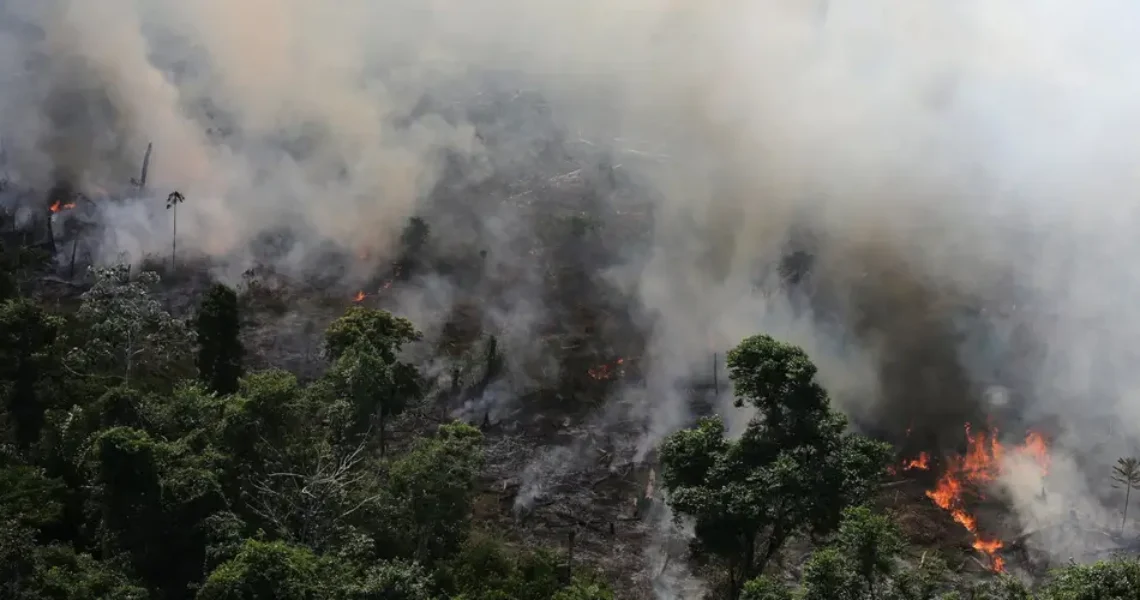
MANAUS October 2026 is proving to be a dramatic month for the state of Amazonas, in northern Brazil. The combination of climate factors and deforestation pressures has caused a dramatic increase in fires, severely impacting the rainforest’s biodiversity and the health of the local population.
Censipam and INPE data: a worrying escalation
According to the findings of the Operations and Management Center of the Amazon Protection System (Censipam) through the Painel do Fogo, in the first ten days of October 2026 alone the State of Amazonas recorded 1,380 fire outbreaks. The data marks an increase in 271% compared to the same period in 2025, when 372 outbreaks were detected.
Looking at a broader time frame, from the beginning of the year until October 12, 2026, the state has accumulated a total of 7,815 fires, highlighting a growth of the 116% compared to the previous year.
The causes, impact and collision on emergency vehicles
Analysis conducted by environmental authorities shows that most of the outbreaks are linked to human activity and illegal deforestation, aimed at clearing land for grazing and crops. The fires affect privately owned lands, reserves, and indigenous territories.
In this emergency context, a fierce institutional conflict has broken out between local authorities and the federal government. The Fire Brigade Command and the Government of the State of Amazonas have announced that the federal government has rejected the state’s formal request for the dispatch of four firefighting aircraft (Canadair (Firefighting aircraft). These aircraft are considered essential for reaching the most remote and isolated forest areas, where ground intervention is impossible. Following the negative response, the state government was forced to independently contract additional air resources to support the operations.
For its part, the Ministry of the Environment responded by stating that it had provided logistical support and that local management had previously renounced part of the contingent due to temporary rainfall recorded at the end of September.
Health consequences and state of emergency
The smoke from the fires has blanketed large areas of the metropolitan region, including the capital Manaus, bringing air quality to levels classified as “poor.” The situation has prompted health authorities and the Civil Protection Department to recommend the use of masks for the most vulnerable groups and, in several municipalities, to suspend school activities.
In the face of the worsening crisis, it has been recognized that state of emergency in dozens of municipalities in the Amazon, with the mobilization of hundreds of brigadists and support forces in an attempt to contain the flames and limit environmental damage.